
Forestry Mulching Johnston County NC | Reduce Pests
Why Overgrown Land in Johnston County, North Carolina Attracts Ticks and Snakes
If you’ve got a section of your property you avoid walking through, you’re not alone.
Maybe it’s the back edge of your lot. Maybe it’s that stretch behind the fence line. It started as “just some brush,” and now it’s thick, tangled, and hard to see through. After a while, it doesn’t just look messy. It starts to feel like something’s hiding in it.
That’s usually when the concern sets in.
You start thinking about ticks. You wonder if snakes are moving through there. If you’ve got kids or pets, it’s even harder to ignore. You don’t want to guess what’s living in that overgrowth.
Around Smithfield and across Wake and Johnston Counties, we see this pattern all the time. Growth comes in fast, especially through spring and early summer. What looks manageable in January can turn into a problem by June.
And once it’s thick enough, it creates the exact kind of environment pests look for.
What Is Forestry Mulching and How Does It Work?
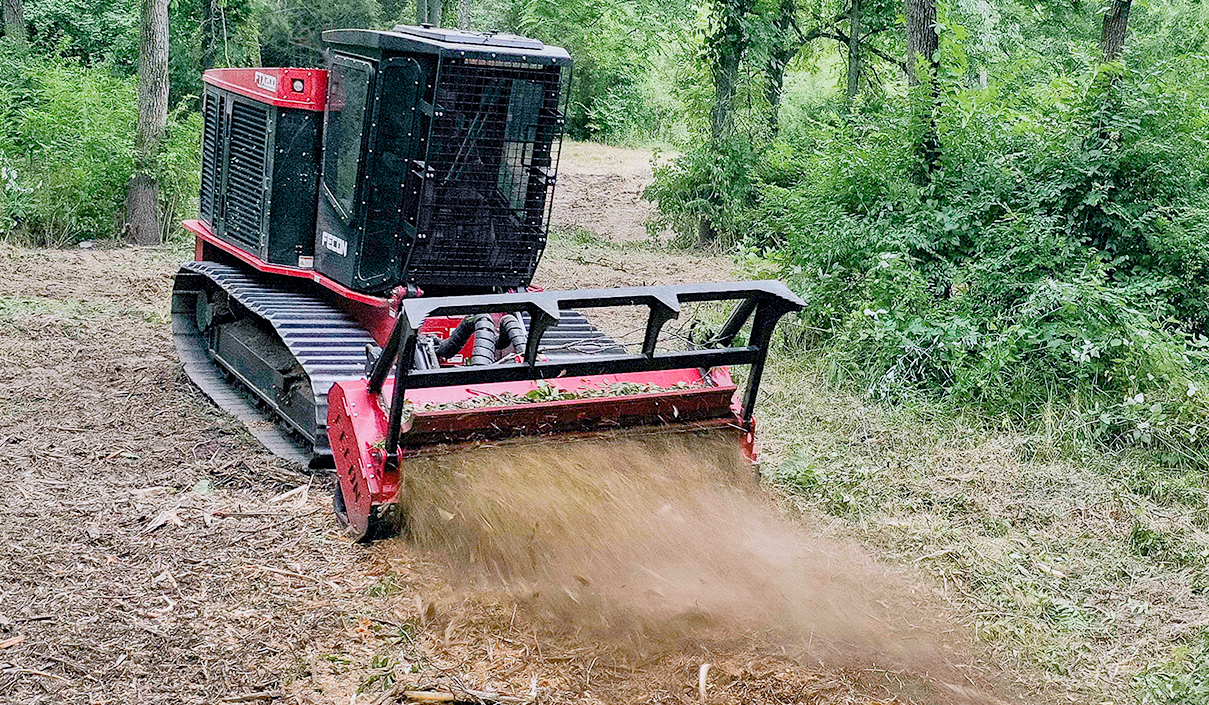
Forestry mulching is a way to clear land without tearing it apart.
Instead of cutting, piling, hauling, and burning, a specialized machine grinds brush, small trees, and vegetation into mulch right on the spot. That mulch gets spread across the ground as the work happens.
Here’s what that means for your property:
Thick brush gets reduced down to ground level
Small trees and undergrowth are cleared
The leftover material becomes a natural ground cover
You’re not left with piles, burn marks, or bare dirt. You’re left with a cleaner, more usable space.
For properties in Johnston County, where overgrowth can come back quickly, this approach keeps things controlled without creating new problems.
Signs Your Property Needs Forestry Mulching Now
Some properties make the need obvious. Others sneak up on you.
Here are a few signs we look for when walking a property:
You can’t clearly see across sections of your land
Thick brush is growing close to your home or structures
There are areas you avoid walking through
You’ve noticed more insects or wildlife activity
Trails, fence lines, or property edges are disappearing
The land hasn’t been maintained in years
If you’re dealing with one or more of these, the issue isn’t just appearance. It’s usability and safety.
How Overgrowth Creates the Perfect Environment for Pests
Overgrowth doesn’t just block your view. It creates shelter.
Ticks thrive in shaded, moist environments. Tall grass, leaf litter, and dense brush give them exactly what they need. They stay low, wait for something to pass by, and latch on.
Snakes follow a similar pattern. They look for:
Cover from predators
Cooler ground temperatures
Access to food like rodents and insects
When your property is overgrown, you’re giving them all three.
It’s not about panic. It’s about understanding how the environment works. When the land becomes thick and unmanaged, it becomes more inviting for things you probably don’t want around.
How Forestry Mulching Helps Reduce Ticks on Your Property
Forestry mulching changes the conditions that ticks rely on.
By clearing dense vegetation, you:
Remove shaded hiding areas
Increase sunlight exposure on the ground
Reduce moisture buildup in thick brush
Ticks don’t disappear overnight, but their habitat gets disrupted.
We’ve seen properties where homeowners noticed a clear difference after clearing. It’s not magic. It’s just removing the environment that allows them to thrive.
Can Forestry Mulching Help Keep Snakes Away?
No one can promise a property will be completely free of snakes.
But you can make it a lot less attractive to them.
Snakes prefer areas where they can move unseen and stay protected. When you open up the land:
Visibility improves
Hiding spots are reduced
Their food sources become easier to spot and manage
In short, the property becomes less comfortable for them.
Most homeowners feel a lot more at ease simply being able to see where they’re walking again.
Forestry Mulching vs. Traditional Land Clearing in Johnston County, North Carolina
When people think about clearing land, they usually picture bulldozers or large excavation work.
That approach still has its place, but it’s not always the best option.
Traditional clearing:
Removes everything, including topsoil
Leaves behind debris piles or requires hauling
Often creates more disturbance to the land
Forestry mulching:
Clears vegetation while leaving the soil intact
Turns debris into mulch instead of waste
Minimizes disruption to the property
For many homeowners in Johnston County, forestry mulching is a more controlled and efficient option, especially when the goal is to improve usability without starting from scratch.
Is Forestry Mulching Safe for Your Soil and Property?
This is a common concern, and it’s a fair one.
Done correctly, forestry mulching can actually benefit your property:
The mulch layer helps reduce erosion
Soil structure stays intact
Nutrients from organic material return to the ground
Instead of stripping the land, it works with it.
That said, not every property is the same. Slope, drainage, and intended use all matter. That’s why we take time to understand what the homeowner wants long-term before recommending a plan.
Cost of Forestry Mulching Near Johnston County, North Carolina
Cost depends on a few key factors:
Size of the area
Density of vegetation
Terrain and accessibility
Type of material being cleared
Light brush on flat ground is very different from thick, wooded areas with uneven terrain.
What we always tell homeowners is this: the cheapest option isn’t always the one that solves the problem.
The goal is to get a result that lasts and makes the property easier to manage moving forward.
When Is the Best Time to Schedule Forestry Mulching?
Timing can make a difference.
In Johnston County, spring and early summer are when growth starts to take off. Waiting too long can make the job more difficult and more expensive.
That said, forestry mulching can be done year-round in most cases.
The best time usually comes down to:
How fast the growth is spreading
What you plan to use the land for next
Whether pests have already become a concern
If you’re already noticing overgrowth and activity, it’s usually better to act sooner rather than later.
Common Mistakes Homeowners Make When Clearing Overgrown Land
We’ve seen a lot of trial-and-error attempts before homeowners call for help.
Some common mistakes include:
Letting the problem grow for too long
Trying to clear land with basic tools that aren’t designed for it
Removing vegetation without a plan for regrowth
Choosing methods that damage the soil unnecessarily
Clearing land isn’t just about cutting things down. It’s about doing it in a way that makes the property easier to maintain afterward.
What to Expect During a Forestry Mulching Project
Most homeowners want to know what the process looks like before committing.
Here’s a general idea:
The property is evaluated to understand layout and goals
A plan is built around access, terrain, and desired outcome
Equipment is brought in to begin clearing and mulching
Material is processed and spread evenly across the ground
The goal isn’t just to remove overgrowth. It’s to leave the land in a condition that’s usable and manageable.
How Long Do Forestry Mulching Results Last?
That depends on how the land is maintained afterward.
Mulching clears existing growth, but new growth will come back over time. The difference is that it becomes easier to manage.
Many homeowners find that after the initial clearing, maintenance becomes much simpler. Instead of dealing with years of buildup, you’re just keeping things under control.
How to Choose the Right Forestry Mulching Contractor Near Johnston County, North Carolina
Not all land clearing is done the same way.
When choosing a contractor, look for someone who:
Understands local conditions
Takes time to assess your property
Explains the approach clearly
Focuses on your long-term goals, not just the immediate job
At Absolute Septic, we approach every property differently. No two pieces of land behave the same way, and the solution should reflect that.
Final Thoughts on Forestry Mulching and Property Safety
If your property has gotten to the point where you’re avoiding parts of it, that’s usually a sign something needs to change.
Overgrowth doesn’t just affect how your land looks. It affects how it functions and how safe it feels.
Forestry mulching is one way to take that control back.
It clears the land, improves visibility, and helps reduce the conditions that attract ticks, snakes, and other unwanted activity.
More than anything, it gives you your property back in a way that feels usable again.
And for most homeowners, that’s the real goal.


