Interior vs Exterior French Drains Near Johnston County NC
Why Drainage Problems Are So Common in Johnston County, North Carolina
If you’re here, there’s a good chance you’ve already seen the signs.
Water sitting in your yard after a storm. Soil that never seems to dry out. Maybe even moisture creeping into your crawlspace or basement. You walk outside and think, this doesn’t look right… and it’s probably getting worse.
Most homeowners don’t start looking into drainage solutions until it becomes a real problem. And by that point, there’s usually some stress behind it. You’re wondering if it’s damaging your foundation. You’re thinking about the cost. You might even be worried you waited too long.
We see this all the time working with homeowners around Smithfield and across Wake and Johnston Counties.
A big reason for these issues comes down to the local conditions. The soil here tends to hold water, and many properties don’t have the natural slope needed to move water away from the home. When heavy rain hits, that water has nowhere to go.
That’s where French drains come into the conversation.
But then comes the real question: Do you need an interior system or an exterior one?
What Is a French Drain and How Does It Work?
At its core, a French drain is a simple idea.
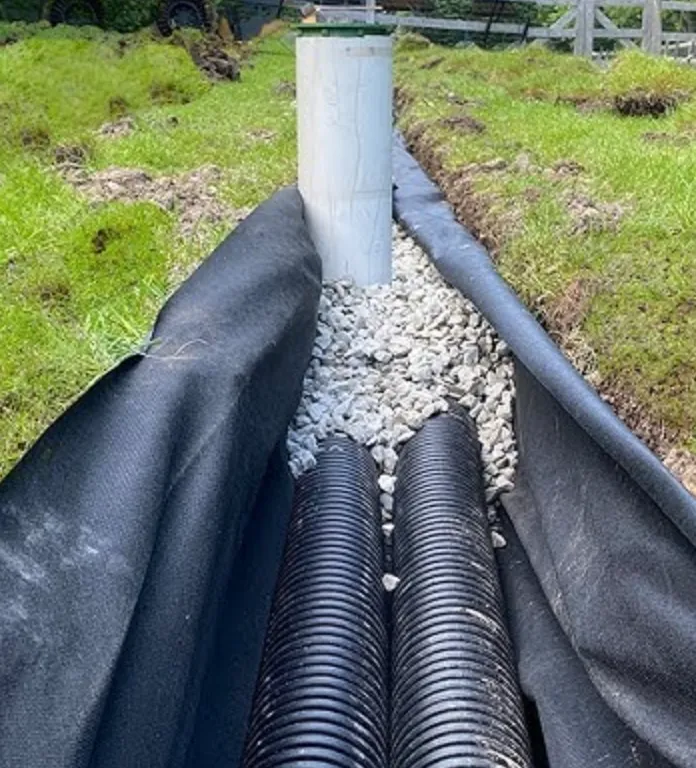
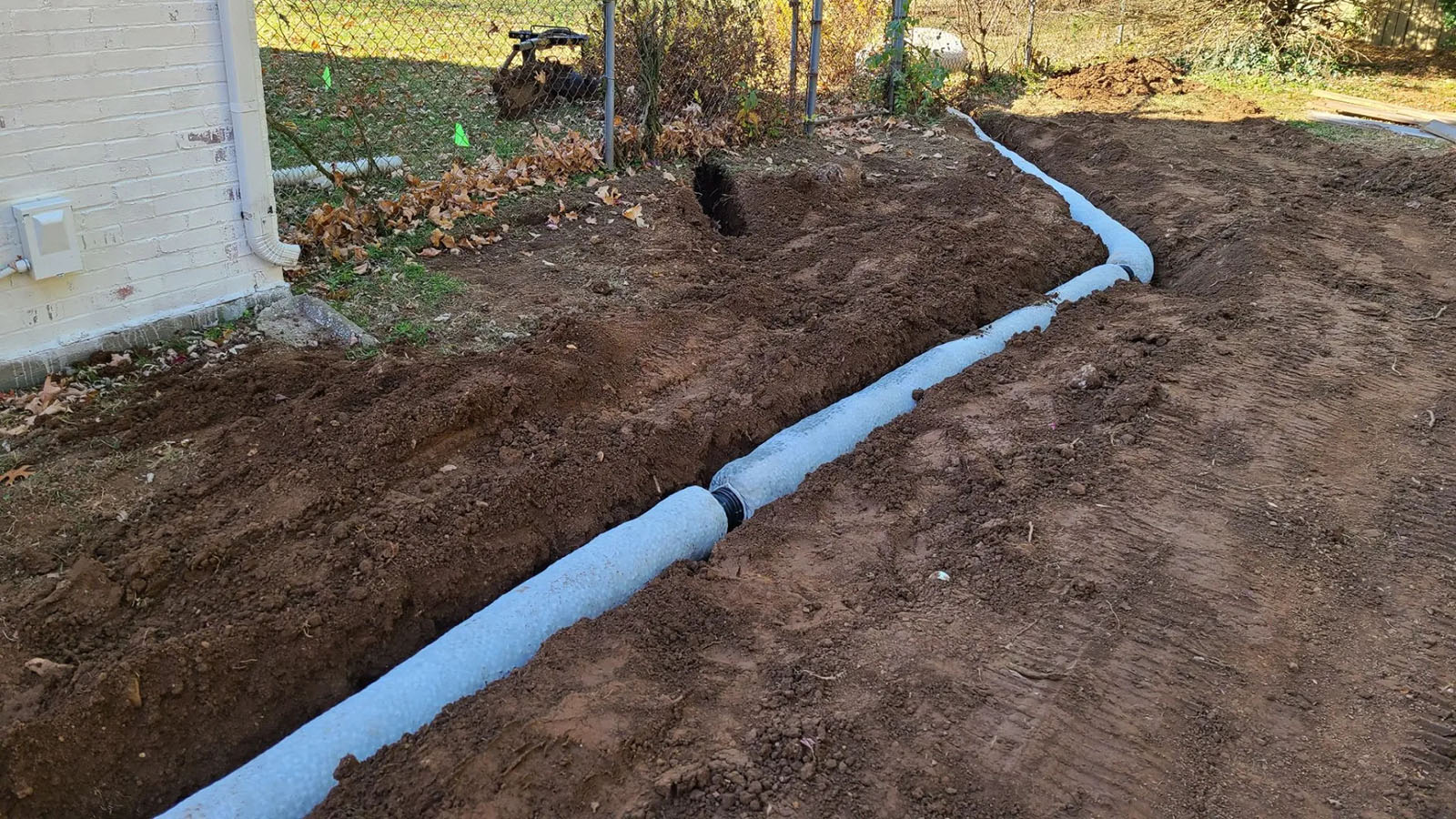
It’s a trench filled with gravel and a perforated pipe that collects water and redirects it away from problem areas. Instead of letting water sit and soak into places it shouldn’t, the system gives it a controlled path to follow.
Think of it like this. Water will always take the easiest route. A French drain creates that easy route, but sends the water somewhere safe.
There are two main types:
Interior French drains (installed inside or along your foundation)
Exterior French drains (installed outside around your home or yard)
Both solve water problems, but they do it in very different ways.
Signs You May Need a French Drain Around Your Home
Before choosing between interior and exterior, it helps to confirm whether a French drain is even the right solution.
Here are some common signs we see:
Water pooling near your foundation
A yard that stays soggy days after rain
Musty smells in a crawlspace or basement
Visible water stains on walls or floors
Erosion or washed-out landscaping
Cracks forming near the base of your home
If any of these sound familiar, drainage is likely part of the issue. The next step is figuring out how to fix it.
What Is an Interior French Drain System?
An interior French drain is installed along the inside perimeter of your home, usually in a basement or crawlspace.
Instead of trying to stop water from getting in, it manages water after it enters.
Here’s how it works:
A trench is cut along the inside edge of the foundation
A perforated pipe is placed in gravel
Water is collected and directed to a sump pump
The pump moves the water away from the home
It’s a controlled system designed to keep the inside of your home dry, even if water reaches the foundation.
Pros and Cons of Interior French Drains
Pros:
Works well when water is already entering the home
Less disruption to your yard and landscaping
Often more predictable in performance
Can be installed without major exterior excavation
Cons:
Does not stop water from reaching the foundation
Requires a sump pump (which needs maintenance)
Installation involves working inside your home
May not address the root cause of drainage issues outside
Interior systems are often the right choice when the problem has already made its way indoors.
What Is an Exterior French Drain System?
An exterior French drain is installed outside your home, usually along the foundation or in problem areas in the yard.
This system works by intercepting water before it reaches your home.
Here’s the basic process:
A trench is dug around or near the foundation
A perforated pipe is installed with gravel
Water is collected and redirected away from the property
Instead of managing water after the fact, it aims to prevent the problem in the first place.
Pros and Cons of Exterior French Drains
Pros:
Stops water before it reaches your home
Helps protect your foundation long-term
Can solve yard drainage issues at the same time
No reliance on interior pumps in many cases
Cons:
More labor-intensive installation
Can disrupt landscaping or hardscaping
May be more expensive depending on access and layout
Requires proper grading to work effectively
Exterior systems are often the better choice when you want to fix the source of the problem, not just manage the symptoms.
Interior vs. Exterior French Drains: Key Differences Homeowners Should Know
The biggest difference comes down to where the water is handled.
Interior systems deal with water after it enters
Exterior systems deal with water before it reaches your home
Here’s a simple way to think about it:
If your issue is happening inside, an interior drain may be necessary.
If your issue starts outside, an exterior drain is often the better fix.
In many cases, the right answer isn’t obvious until someone evaluates the property.
Which French Drain Is Better for Your Soil and Property in Johnston County?
Soil plays a bigger role than most homeowners realize.
In areas like Johnston County, clay-heavy soil tends to hold water. That means water doesn’t drain naturally and instead builds up around your home.
Because of this:
Exterior drains can be very effective at redirecting water early
Interior drains may still be needed if water pressure builds up against the foundation
Every property is different. Slope, elevation, and how water flows across your land all matter.
That’s why a one-size-fits-all approach rarely works.
At Absolute Septic LLC, we focus on customizing the solution based on what your property is actually doing, not just what looks good on paper.
Cost Differences Between Interior and Exterior French Drains
Cost is usually one of the first concerns, and for good reason.
Interior French drains are often more predictable in cost because the work area is contained. Exterior systems can vary more depending on:
How deep the trench needs to go
Access around the home
Landscaping or obstacles
Length of the system
In general:
Interior systems may be less disruptive but involve equipment like sump pumps
Exterior systems may cost more upfront but address the issue at its source
The real question isn’t just price. It’s whether the solution actually fixes the problem long-term.
Common Mistakes Homeowners Make When Choosing a Drainage Solution
We’ve seen a lot of homeowners try to solve drainage issues the wrong way before calling for help.
Some of the most common mistakes include:
Choosing the cheapest option instead of the right one
Installing a system without understanding water flow on the property
Ignoring grading and slope issues
Trying DIY fixes that don’t last
Only treating symptoms instead of the root cause
Drainage problems tend to get worse over time, not better. Getting it right the first time matters.
Can You Combine Interior and Exterior French Drains for Better Results?
In some cases, yes.
There are properties where both systems make sense:
Exterior drains handle surface and groundwater
Interior drains act as a backup system
This layered approach can provide extra protection, especially for homes with ongoing water pressure issues.
It’s not always necessary, but when it is, it can make a big difference.
How Long Do French Drain Systems Last?
A properly installed French drain can last decades.
The key factors are:
Quality of installation
Type of materials used
Proper grading and design
Ongoing maintenance
Clogging is one of the biggest risks over time, especially if the system wasn’t installed correctly or lacks proper filtration.
Done right, a French drain is a long-term solution, not a temporary fix.
What to Expect During a French Drain Installation
Homeowners often worry about what the process will look like.
Here’s a general idea:
Interior installation:
Cutting along the foundation floor
Installing pipe and gravel
Connecting to a sump system
Restoring the surface
Exterior installation:
Excavating around the home or yard
Installing pipe and drainage layers
Redirecting water flow
Restoring landscaping
Every project is different, but a good contractor will walk you through the process before anything starts.
How to Choose the Right French Drain Contractor Near Johnston County, North Carolina
Not all drainage work is the same.
When choosing a contractor, look for:
Experience with local soil and conditions
Clear explanation of the problem and solution
Willingness to customize the approach
Transparent expectations about the process
You want someone who understands how water behaves on your property, not just someone who installs pipes.
That’s a big part of how we approach projects at Absolute Septic. Every property tells a different story, and the solution should match it.
Final Thoughts: Choosing the Right Drainage Solution for Your Property
If you’re dealing with water issues around your home, you’re not alone.
It’s frustrating, it can feel overwhelming, and it’s easy to worry about what it might lead to.
The good news is there are proven solutions.
Interior and exterior French drains both work. The right choice depends on your property, your soil, and where the problem is starting.
The key is understanding what’s actually happening before deciding how to fix it.
Because when you match the right solution to the real problem, you’re not just moving water. You’re protecting your home for the long run.


